
Bosnia and Herzegovina
Two cities I explored, two routes that actually work, and the practical page. I wish someone had handed me that the first time.
Updated September 2026
What nobody tells you before you land
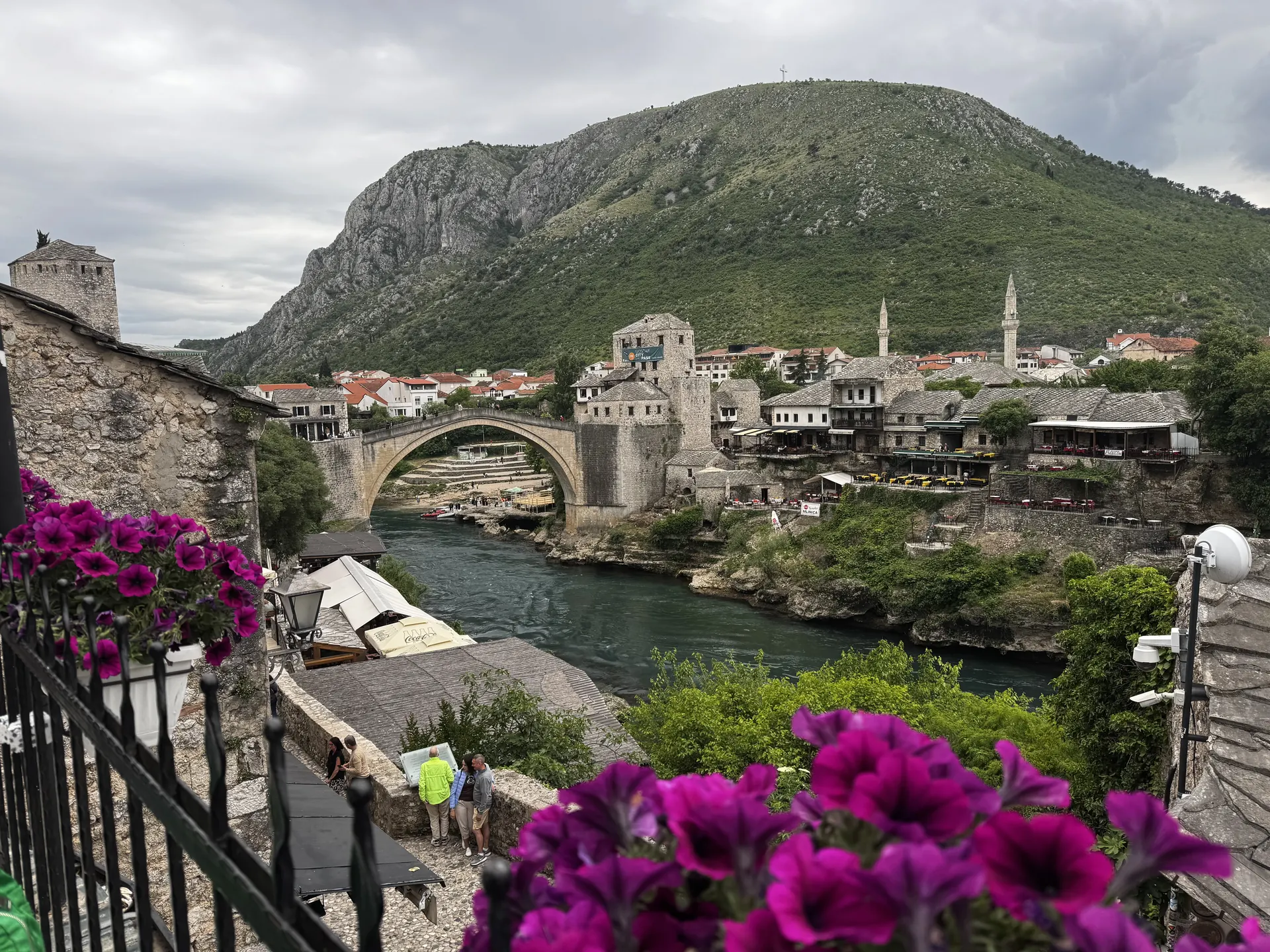
Bosnia and Herzegovina is small, mountainous and far closer than it looks — most travelers see it in a rushed day trip from Croatia and never understand what they walked past. The country carries the marks of the 1990s war openly: the pockmarked façades in Sarajevo, the rebuilt bridge in Mostar. It is part of the story, not a spectacle, and the people who lived it will tell it plainly if you slow down enough to listen.
So the two routes below are built to be walked, not ticked off. Give Sarajevo two full days — the Ottoman bazaar, the Austro-Hungarian streets and the siege history all sit within a few blocks — then take the scenic train down to Mostar and let Herzegovina open out around it. It is one of the most affordable corners of Europe, and cash still runs the day.
Fact sheet
Everything practical, on one page
Itineraries
Two routes that actually work
Four days is enough for the two cities without rushing. Seven lets Herzegovina open out — waterfalls, a dervish house and an Ottoman village.
Two full days in Sarajevo — the bazaar, the coffee, the siege history — then the scenic train down to Mostar and its old bridge. The version for a long weekend.
The extra days go to Herzegovina around Mostar: the dervish tekke at Blagaj, the Ottoman village of Počitelj, the wide Kravice waterfalls and unhurried, wine-country Trebinje.
City guides
Two cities, walked one street at a time
Sarajevo
Baščaršija's Ottoman bazaar, Austro-Hungarian streets and the siege history that shaped the city.
2 days · Coming soonMostar
The rebuilt Stari Most over the Neretva, the old town, and Herzegovina at your doorstep.
2 days · Coming soonAsked every week
Questions I get about Bosnia and Herzegovina
How many days do I need?+
Four is enough for Sarajevo and Mostar without rushing — two days each. Seven lets you add Herzegovina around Mostar: Blagaj, Počitelj, the Kravice waterfalls and Trebinje. A day trip from Croatia sees the bridge and misses the country.
How do I understand the war history?+
Sarajevo was besieged for nearly four years in the 1990s, the longest siege of a capital in modern history, and the city still carries the marks. Walk it with respect: the Tunnel of Hope museum and the roses in the pavement tell it honestly, and local guides who lived it will explain far more than any plaque.
Is it safe?+
Yes. Bosnia and Herzegovina is a safe, welcoming country for travelers, with low crime and normal city caution enough. Stay on marked paths in the countryside — a few remote areas still have wartime landmines, and they are clearly signposted.
What about money?+
The currency is the convertible mark (BAM), fixed at about 1.96 to the euro — not the euro itself, so don't assume you can pay in euros. Cards work in cities, but carry cash for markets, cafés and small towns. It is one of the cheapest countries in Europe.
The podcast
I walked this before I wrote it
Every guide starts as an episode. Listen to the Bosnia and Herzegovina introduction — the context, the history and the honest bits — then come back for the routes.